‘Eddington’ says what ‘One Battle After Another’ cannot
March 23, 2026
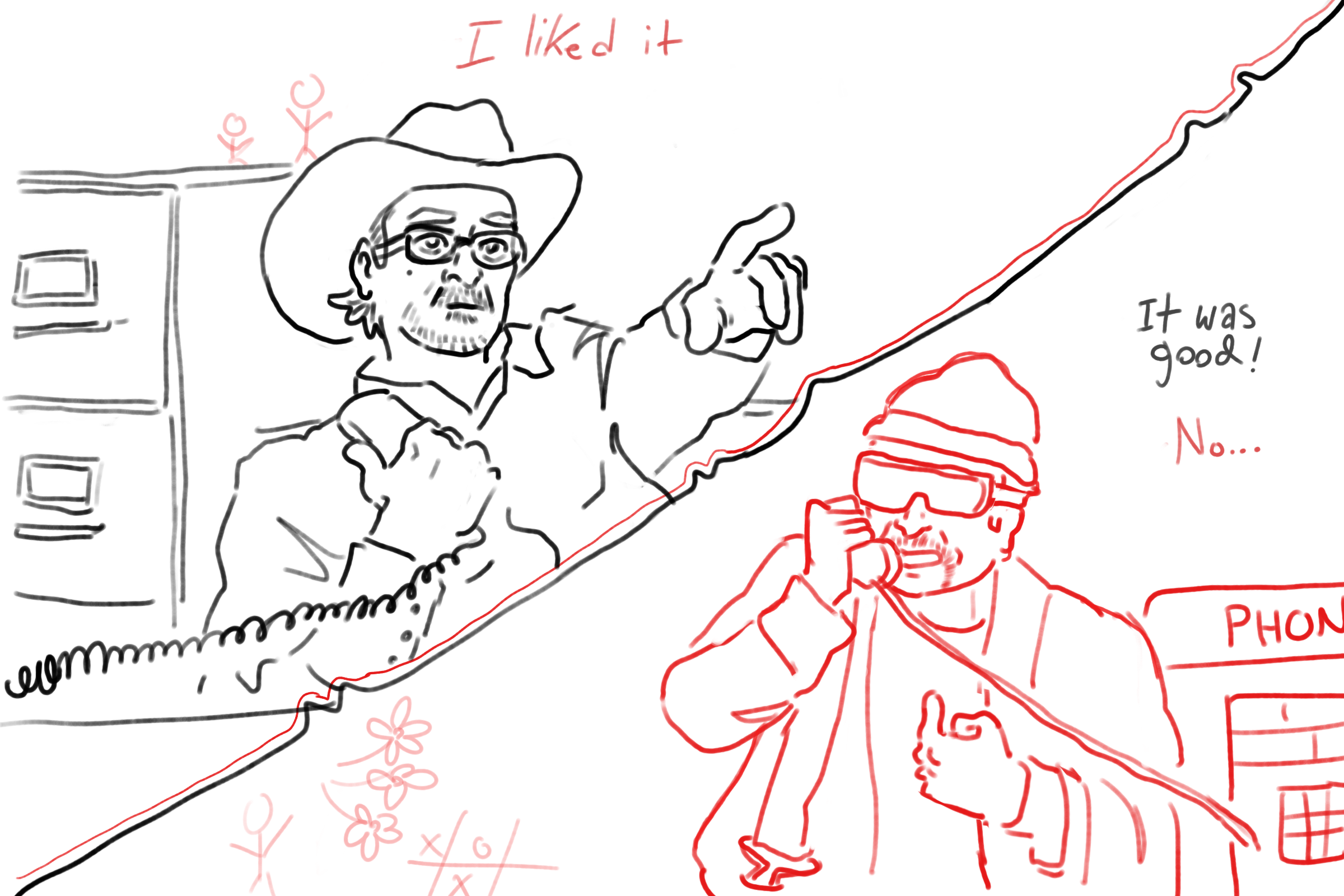
Hover over red text to see commentary.
Ari Aster is known for making you feel uncomfortable at the movie theater. While some directors are good at communicating the thrill of action or romance, Aster excels at making audiences anxious. That’s what makes “Eddington,” his political satire set during the anxiety-ridden spring of 2020, so great. Lately, it feels like we’re living in a world defined by the political fever pitch and social isolation caused by the pandemic. Aster’s take on the period provides creative and nuanced commentary — two thingsComments from Miles
Saying that “One Battle After Another” is not creative nor nuanced shows a lack of understanding for the film. It is creative and comedic in its exploration of the individual response to overwhelming authoritarianism. OBAA is nuanced in how it handles the characters of its story. The machinery of the government and the shady dealings of the white supremacist Christmas Adventurers Club are meant to be in the background and raise the tension of the movie as a whole, not be the political centerpiece of a film.Comments from Miles
Saying that “One Battle After Another” is not creative nor nuanced shows a lack of understanding for the film. It is creative and comedic in its exploration of the individual response to overwhelming authoritarianism. OBAA is nuanced in how it handles the characters of its story. The machinery of the government and the shady dealings of the white supremacist Christmas Adventurers Club are meant to be in the background and raise the tension of the movie as a whole, not be the political centerpiece of a film.Comments from Miles
While OBAA certainly does explore white supremacy, it is treated more as an undercurrent powering the repressive regime. It’s meant to satirize the relationship between white supremacy and the forces of power in society by putting it in such absurd focus that it cannot be ignored. OBAA’s “creative commentary” on society is more about the big levers of power within our institutions rather than the interpersonal strife that “Eddington” touches on. OBAA exaggerates and pokes fun at these powerful ideas that permeate our world, not necessarily offering a solution but, instead, drawing attention to and lampooning them.Comments from Miles
I disagree with this point to a certain extent. The film does seem to dance around the issue of race and certainly could have done more to explore the dynamics and impacts of race and racism on its characters. However, I think it is important to note that most of the film is from the perspective of white man like Pat (Leonardo DiCaprio) or Lockjaw (Sean Penn). Their perspectives are flawed, important to the film, which is meant to be uncomfortable and imperfect.Comments from Miles
I think that this is a reductive take on the film as a whole. It is not a film about the creation of white supremacists — look at something like “American History X” if that is what you are interested in. Instead, it looks at the responses of people against state violence. This is a common theme across political films, but few movies have the same balance of humor, brutality and honesty that OBAA offers. It does not offer solid solutions. Instead, it pries into what makes us tick and what can cause individuals to reject a system that will respond with violence. It is uncomfortable not to be served simple solutions or given an entire plot about how the big bad villain came to be, but that is the point. Individuals facing state violence do not know or need to know the motivations of those coming after them; they simply know that they are being threatened. OBAA does a great job of exploring this — it describes the present state of society rather than dealing with an already litigated past.Comments from Miles
This is more of an extension of Pynchon, the author of the book that the movie was based on, than PTA himself. PTA did a great job of expanding the characters to be more real and less cartoonish than Pynchon did in the novel “Vineland,” but some of that carried over. And, yes, the characters do feel slightly extreme and hyperreal at times.Comments from Miles
I disagree with this; we can see change in the characters of Bob/Pat and Willa as they experience the traumatic events of the film. There is little introspection within the film, but that is mostly because there simply isn’t time, given the stress the characters face throughout the movie.Comments from Miles
Both “Eddington” and OBAA offer valuable messages to their viewers, some just prefer the ease of one message to the other. OBAA is a difficult film in its rejection of offering a truly final message or solution and that is certainly not for everyone. But it doesn’t make it worse.Comments from Miles
This is something Zhane and I agree on wholeheartedly. Sensei was amazing.Comments from Miles
Again, this is a matter of opinion and what themes resonate with the viewer. Zhane and I will continue to disagree about this.